
Companionship
Regular company, conversation, shared activities and a familiar face for people who may be spending more time alone.
- Conversation and social time
- Shared hobbies and activities
- Regular check-ins
- Support with routines
CareWithJohn provides one-to-one support that can help make everyday life more manageable, connected and independent.
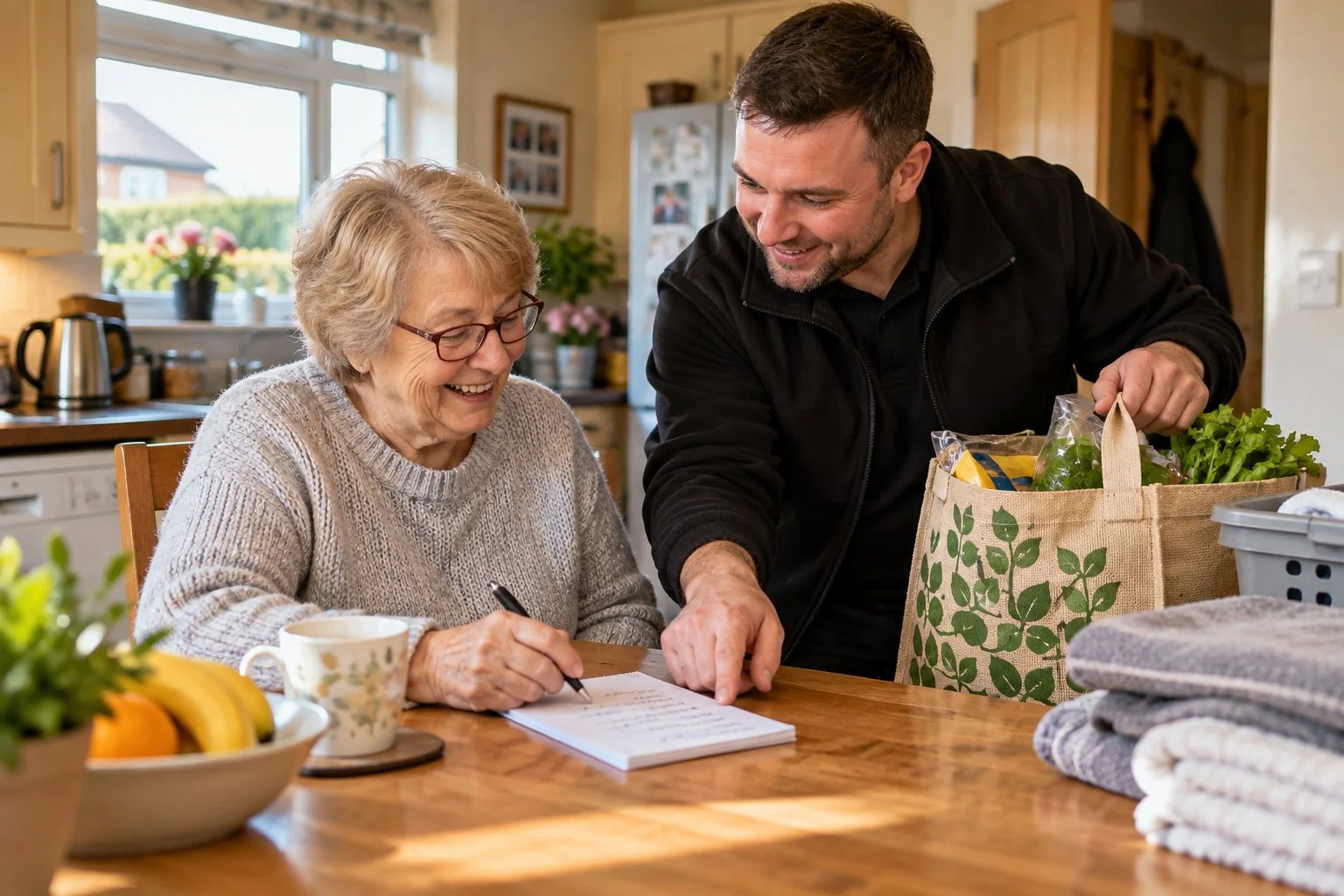
Regular company, conversation, shared activities and a familiar face for people who may be spending more time alone.
Help with everyday tasks while keeping the person involved and in control.
Planned support can give families and unpaid carers some breathing space while the person remains supported.
Every arrangement is discussed individually. Weekly and fortnightly support can be considered around needs, location and availability.
Some people prefer a predictable visit every week or month. Others need a more flexible arrangement. We can discuss both.
Practical help, companionship and everyday support can be arranged around the person and their routine.
Weekly, fortnightly or other regular arrangements can be discussed depending on what would be useful.
Support with getting out, staying connected, attending activities or simply having someone reliable alongside you.
If you are not sure how much support is needed, start with a conversation and we can work through it together.
Private arrangements are discussed around the support required, frequency, location and available time. SDS-funded arrangements can also be discussed where applicable.
Non-personal care support, companionship, community access, practical help and home help. Arrangements are discussed around the individual.
Personal care such as washing, dressing or toileting, nursing or medical treatment. If you need those services, we can help you identify the appropriate route.
CareWithJohn can discuss arrangements where SDS funding is applicable. In Scotland, SDS is designed around choice, control and involvement in decisions about support.
Read the official SDS information →“The aim isn't to take over. It's to provide the right support so the person can do more of what matters to them.”